

Exfoliation | November
QUICK TAKE: Choosing the right face scrub for textured skin
- The best face scrub for textured skin is defined by its particles: fine and non-abrasive, not gritty and jagged. Harsh scrubs cause micro-tears that make texture worse.
- A scrub addresses one specific kind of texture: the rough, dull, flaky surface caused by dead-cell buildup. It's fast and satisfying for that.
- Congestion, deeper unevenness, and scarring usually need a chemical exfoliant or a professional treatment, not a scrub.
- Sensitized or reactive skin often does better with gentle chemical exfoliation than with any scrub.
The Best Face Scrub for Textured Skin: How to Choose One That Actually Helps
By ZO® Skin Health
Choosing the right face scrub for textured skin starts with understanding what's causing the texture. The type of unevenness determines the right tool – and a scrub, used correctly, is genuinely effective for the kind that responds to physical exfoliation. Knowing where it works best, and where a different approach fits better, is what turns a good product into a useful one.
What Causes Uneven Skin Texture?
Uneven skin texture has several causes, and they don't all respond to the same fix. Knowing which kind of texture you're dealing with is the starting point, because that determines whether a scrub is the right tool.
The most common cause is dead-cell buildup and the natural slowing down of your cell cycle as you get older. Skin sheds dead cells continuously, but that process slows with age and can leave a layer of buildup that makes the surface feel rough, look dull, and reflect light unevenly. This is the texture a scrub is genuinely good at improving. Dryness and flaking produce a similar surface roughness, often on top of the same buildup.
Other causes run deeper. Congestion and clogged pores create bumpy texture that lives inside the pore, not on the surface. Post-blemish marks, enlarged-looking pores, and scarring are structural, sitting below the level a scrub can reach. Surface texture responds well to a scrub; deeper texture needs different tools.
Over moisturizing and under exfoliating also leads to dead skin cell build up and creates a false sense of dryness, which is the appearance of your dead cell buildup on the surface of the skin. This also impedes the penetration of your skincare products.
What Makes the Best Face Scrub for Textured Skin?
The best exfoliating scrub is defined almost entirely by its particles. Fine, uniform particles sweep away dead cells effectively while keeping the skin’s surface intact, and that distinction is what makes a scrub consistently comfortable to use.
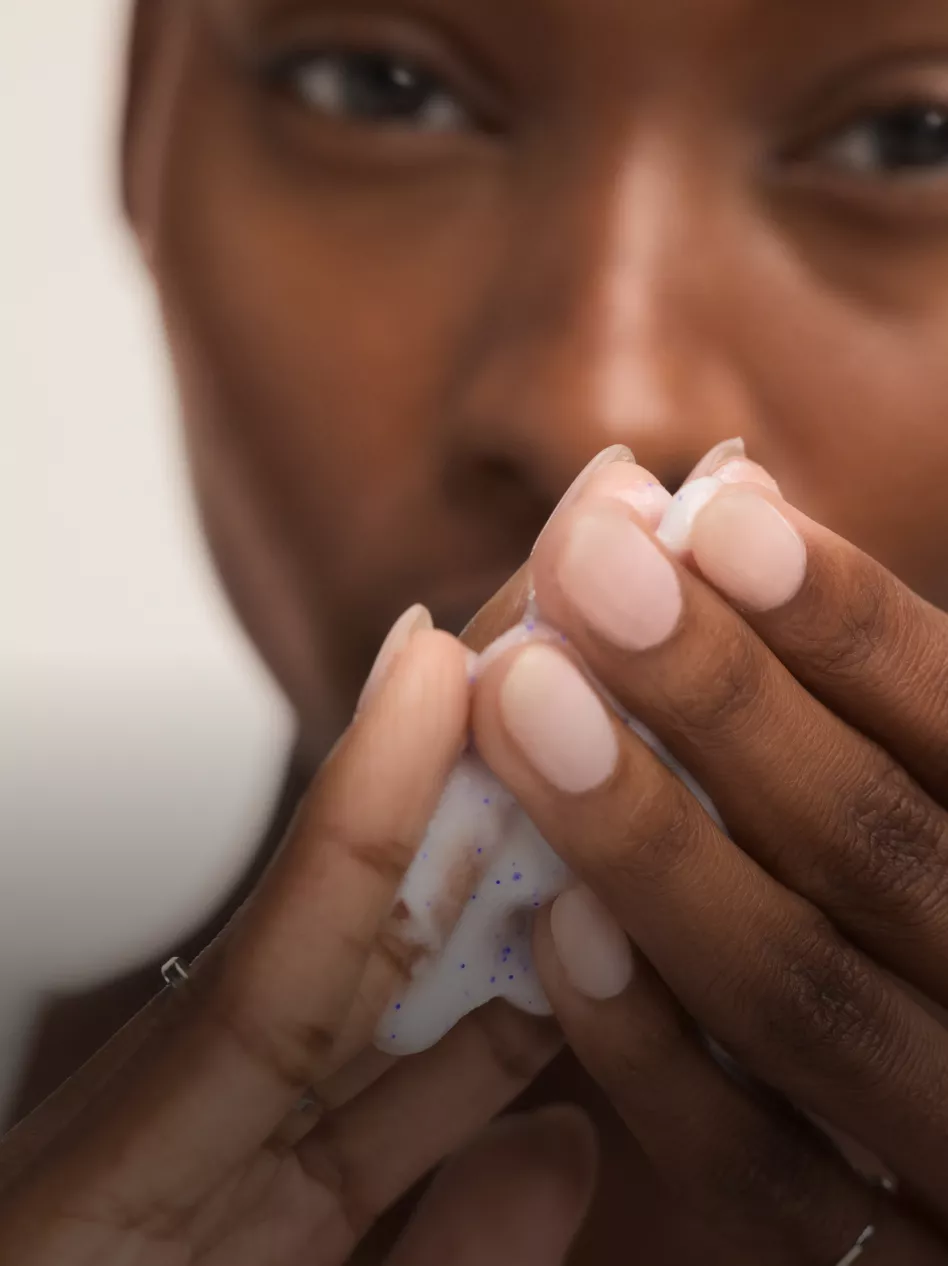
Coarse or irregular particles can cause micro-tears in the skin's surface, which is why particle quality matters as much as the formula around them. Avoiding harsh particles is the key criterion when choosing a physical exfoliator. Fine, uniform alternatives – like the ultra-fine magnesium oxide crystals in ZO's Exfoliating Polish – deliver effective exfoliation without that risk.
Beyond the particles, a good scrub rinses clean, and is designed to fit into a system rather than replace one.
How a Face Scrub Improves Skin Texture
A face scrub improves texture by physically clearing the dead-cell buildup that dulls and roughens the surface. When those cells are swept away, the smoother, fresher skin underneath is revealed, and light reflects off it more evenly. The effect is immediate: skin feels softer the moment you rinse.
There's a second, quieter benefit. Clearing surface buildup lets the products you apply afterward absorb properly, so a scrub used as part of a daily system also improves how well your serums and moisturizers work. That's why exfoliation sits in the Getting Skin Ready® prep sequence rather than standing alone. A scrub used two to three times a week up to daily use can also help manage the flaking that comes with starting a retinol, keeping the surface smooth while a stronger active does its work underneath.
When a Different Exfoliant Fits Better
Different types of texture respond to different tools, and knowing which fits your skin saves time and gets better results. For surface texture – the rough, dull kind driven by dead-cell buildup – a fine-particle scrub is the right fit. For other types, a different approach tends to work better.
Sensitized, reactive, or redness-prone skin often responds more comfortably to a gentle chemical exfoliant, since it loosens dead cells without friction. The Exfoliation Accelerator – a glycolic and lactic acid blend – is built for this and suits skin that prefers a non-physical approach. Texture driven by congestion responds better to a salicylic-based formula, such as Complexion Clarifying Serum, that reaches inside the pore rather than working at the surface. For structural texture – deep scarring or persistently enlarged-looking pores – a professional assessment opens up in-office options that at-home exfoliation can't replicate. Some skin benefits from both physical and chemical exfoliation together, which is the rationale behind a combination product like the Dual Action Scrub in the exfoliator range.
Fixing Skin Texture Is About More Than a Scrub
For the rough, dull surface of dead-cell buildup, a fine-particle scrub used correctly is genuinely effective and immediately satisfying. For deeper or more complex texture, it's one part of a larger approach that may include chemical exfoliation, targeted treatments, and professional guidance.
The most reliable path to smoother skin is an assessment of what's actually driving your texture. A skincare expert can identify the cause and recommend the right combination of exfoliation method, frequency, and supporting products as part of a personalised protocol built on the ZO system.
Frequently Asked Questions About Face Scrubs for Textured Skin
It depends on the texture and your skin. A fine-particle scrub is excellent for the rough, dull surface caused by dead-cell buildup and gives instant smoothness. A chemical exfoliant is often better for congestion, sensitized skin, and more uniform results, since it works without friction. Many people find a scrub works well for maintenance and a chemical exfoliant for deeper concerns.
Yes, if the particles are harsh or you scrub too often. Coarse, jagged scrubs can cause micro-tears that leave skin rougher and more reactive, and over-scrubbing disrupts the barrier. Choose a fine, non-abrasive formula, use it two to three times a week up to daily, and stop if your skin feels tight or looks red.
You may start with two to three times a week and build up to daily use. Sensitized skin should start at once a week or less and build up to daily use. Let your skin's response guide you rather than a fixed schedule.
No, not on its own. Scars and enlarged-looking pores are structural, sitting deeper than a surface scrub can reach. A scrub can improve the surface smoothness around them, but addressing the structural texture itself usually requires chemical exfoliation over time or professional in-office treatments. A physician can advise on realistic options.
For sensitized skin, the gentlest option matters most. A scrub with ultra-fine, non-abrasive particles used one to three times a week can work, but many people with sensitized, textured skin do better with a gentle chemical exfoliant that smooths without friction. If your skin reacts easily, it's worth having a professional recommend the right approach rather than experimenting.
Shop the Post
Exfoliating Polish

GSR® All Skin Types Normal to Dry Skin
Dual Action Scrub

GSR® Oily + Blemish-Prone Skin AM or PM
Exfoliation Accelerator

All Skin Types Anti-Aging TSA Approved
Complexion Clarifying Serum

All Skin Types Oily + Blemish-Prone Skin Redness