
Exfoliation | October
QUICK TAKE: Physical vs chemical exfoliation
- Physical exfoliation sweeps dead cells away with fine particles. Chemical exfoliation uses acids or enzymes to loosen the bonds holding those cells together so they shed on their own.
- Formulation quality decides more than the category. A physical exfoliant with harsh, jagged particles can cause micro-tears; one with ultra-fine crystals is gentle enough for all skin types.
- Chemical exfoliation is often the more uniform, lower-friction option and can be a gentler choice for sensitive skin. It also requires diligent daily sun protection.
- The best exfoliation method depends on your skin type, your concern, and how the product is formulated. Some routines use both, or a combination product.
- Exfoliation is the Exfoliate step of a prepared-skin routine, not a standalone treatment. Two to three times a week is the right rhythm for most people. Overdoing it works against you.
Physical vs Chemical Exfoliation: Which Is Better for Your Skin?
By ZO® Skin Health
The physical vs chemical exfoliation debate usually gets framed as a verdict: one method wins, the other is outdated. That framing is convenient and wrong. Both do the same essential job, clearing the dead cells that dull the surface and block what you apply next, and both can be done well or badly. The useful question isn't which category is superior. It's which approach suits your skin, and whether the formula is built to exfoliate without damaging the barrier.
Neither physical nor chemical exfoliation is universally better. Physical exfoliation uses fine particles to manually sweep away dead surface cells, while chemical exfoliation uses acids or enzymes to loosen the bonds holding those cells together. The right method depends on your skin type, your goal, and the quality of the formula, and both belong to the Exfoliate step of a prepared-skin routine.
What exfoliation does, and why it's step one
Exfoliation removes the layer of dead cells that accumulates on the skin's surface, and it earns its place early in a routine for a specific reason. Skin naturally sheds dead cells, but that process slows with age and can leave buildup that looks dull, feels rough, and clogs pores. Clearing it does two things: it improves the look and feel of the surface, and it lets everything applied afterward absorb properly.
That's why exfoliation sits inside the Getting Skin Ready® protocol, the cleanse, exfoliate, tone sequence that prepares skin before any treatment product goes on. Exfoliation isn't a treatment in itself so much as the step that makes your treatments work. Skip it, and serums land on a layer of debris instead of receptive skin.
Physical vs chemical exfoliation: how each one works
The real difference between physical and chemical exfoliation is mechanical friction versus chemical loosening. Understanding the mechanism is what lets you choose well, because the two feel and behave differently on the skin.
How physical exfoliation works
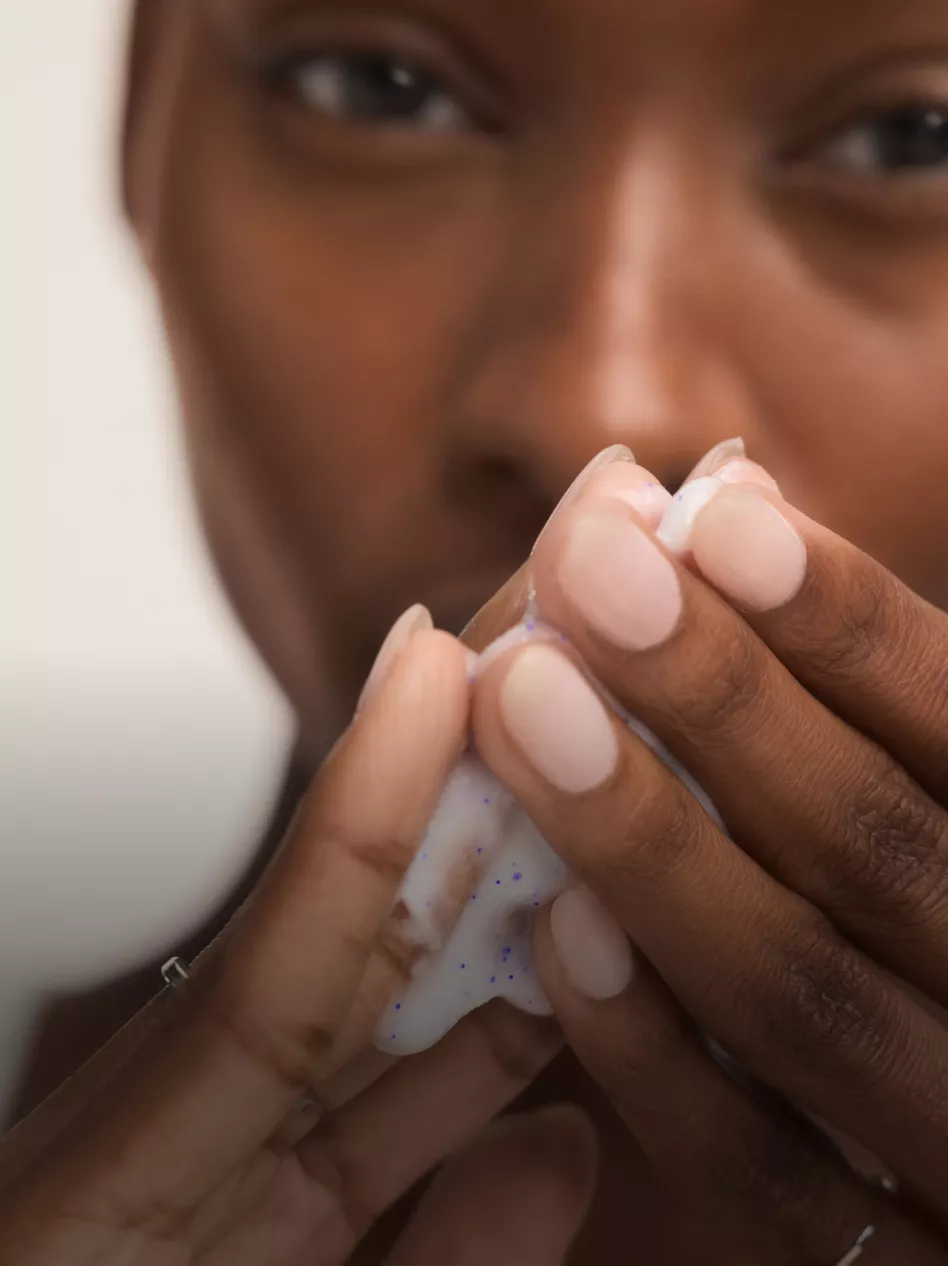
Physical exfoliation, also called mechanical exfoliation, removes dead cells through friction. You massage a product containing fine particles across the skin, and those particles physically sweep away the surface layer. It's immediate: skin feels smoother the moment you rinse.
The catch is entirely in the particles. The thing to avoid is harsh particles that can cause micro-tears in the skin. Jagged, coarse scrubs can disrupt the barrier more than they help, which is where physical exfoliation earned its mixed reputation. The solution isn't to abandon the method; it's to use fine, uniform particles. The Exfoliating Polish, for example, uses ultra-fine magnesium-oxide crystals that sweep away dead cells without being abrasive, which is why it's suitable across skin types.
How chemical exfoliation works
Chemical exfoliation removes dead cells without any friction at all. Instead of scrubbing, it uses acids or enzymes to dissolve the bonds that hold dead cells to the surface, so they shed on their own.
Chemical exfoliants come in a few forms: AHAs (lactic, glycolic) that work on the surface and tone, BHAs (salicylic acid) that are oil-soluble and reach into pores, and fruit enzymes that offer the gentlest action. ZO's Exfoliation Accelerator uses a glycolic and lactic acid blend paired with aloe, green tea, and chamomile to calm the skin while it works. Because it loosens more stubborn dead cells rather than relying on abrasion, chemical exfoliation is often described as a gentler alternative to physical scrubs for sensitive skin.
What are the benefits of physical exfoliation?
The main benefits of physical exfoliation are quick results and precise control. You feel the smoothness immediately, and you can direct the pressure and focus to specific areas like the T-zone. For skin that tends toward flaking, physical exfoliation is particularly practical.
It's also the more comfortable option for anyone wary of acids. There's no tingling, no sun-sensitivity consideration, and no acclimation period. And it pairs usefully with active-heavy routines: using the Exfoliating Polish two to three times a week can gently sweep away the flaking that often accompanies starting a high-strength retinol, keeping the surface smooth so the rest of your routine absorbs. The one requirement is formulation quality: the benefits hold only when the particles are fine and non-abrasive.
What are the benefits of chemical exfoliation?
The main chemical exfoliation benefits are uniformity and depth. Because acids and enzymes work at the level of cell adhesion rather than through friction, they exfoliate evenly across the whole surface without the risk of uneven pressure or micro-tears. That makes chemical exfoliation well suited to concerns like uneven tone, rough texture, and congestion.
BHAs add a specific advantage for blemish-prone skin: being oil-soluble, they penetrate into pores to clear the buildup that contributes to breakouts. Chemical exfoliation also tends to be the gentler long-term choice for reactive skin when used at appropriate strength and frequency. The trade-off is that acids can increase sun sensitivity, so daily broad-spectrum sunscreen isn't optional while using them. It's a requirement, not a suggestion.
Chemical exfoliants vs physical scrubs: which is better for your skin?
The best exfoliation method is the one matched to your skin type and concern, not the one that wins in the abstract. Here's how the chemical exfoliants vs physical scrubs question tends to resolve in practice.
If your skin is oily, congested, or blemish-prone, chemical exfoliation, especially a BHA or a glycolic and lactic blend, usually does more, because it reaches into pores and works uniformly. If your primary goal is instant smoothness, radiance, or managing flaking, a fine-particle physical exfoliant is fast and satisfying. If your skin is sensitive or reactive, a gentle chemical exfoliant or a low-frequency approach is often kinder than friction, though a well-formulated fine-crystal polish can also work. And if your skin is oily and blemish-prone but you want both actions, a combination product such as the Dual Action Scrub in the exfoliator range pairs gentle chemical exfoliation with physical exfoliation in one step.
The honest answer to "which is better" is that the categories matter less than the fit. A thoughtfully formulated product in either category, used at the right frequency for your skin, beats the "superior" method used wrong.
Finding the best exfoliation method for your skin
The best exfoliation method comes down to your skin type, your goal, and a formula built to exfoliate without compromising the barrier, not to a blanket rule about scrubs versus acids. Both physical and chemical exfoliation earn their place when chosen deliberately and used with restraint. The mistake is treating one as universally right and the other as obsolete.
If you're not sure which suits your skin, or how to fit exfoliation around the rest of your routine, that's worth confirming rather than guessing. A skincare expert can assess your skin and recommend the right method, formula, and frequency as part of a personalised protocol built on the ZO system.
Frequently Asked Questions About Physical and Chemical Exfoliation
The answer is often chemical exfoliation, used gently. Because acids and enzymes work without friction, a low-strength chemical exfoliant or fruit enzyme can be kinder to reactive skin than a scrub. That said, a well-formulated physical exfoliant with ultra-fine, non-abrasive particles can also suit sensitive skin. The key is formulation quality and frequency, and a skincare expert can help you match both to your skin.
Not usually in the same session, and not aggressively. Combining a strong acid with a scrub at once raises the risk of over-exfoliation and irritation. Some products are formulated to combine both actions safely in one step, but layering separate strong exfoliants back-to-back is a common cause of a damaged barrier. When in doubt, alternate rather than stack.
You can start with two to three times a week and build up to daily use. Let your skin's response guide you: if it feels tight, stripped, or looks red, reduce frequency.
Yes, and it matters more than usual. Alpha-hydroxy acids can increase your skin's sensitivity to the sun, so daily broad-spectrum sunscreen is essential while using chemical exfoliants. This isn't optional; unprotected exposure after exfoliating undermines the benefit and raises the risk of irritation and uneven tone.
Both can support smoother, brighter-looking skin, but the mechanism differs. Chemical exfoliation works uniformly on tone and texture and improves how well anti-aging serums absorb. Physical exfoliation delivers instant smoothness and helps manage flaking from actives like retinol. Neither is a standalone anti-aging step; their value is in preparing skin so the corrective products that follow can work.
Shop the Post
Exfoliating Polish

GSR® All Skin Types Normal to Dry Skin
Exfoliation Accelerator

All Skin Types Anti-Aging TSA Approved